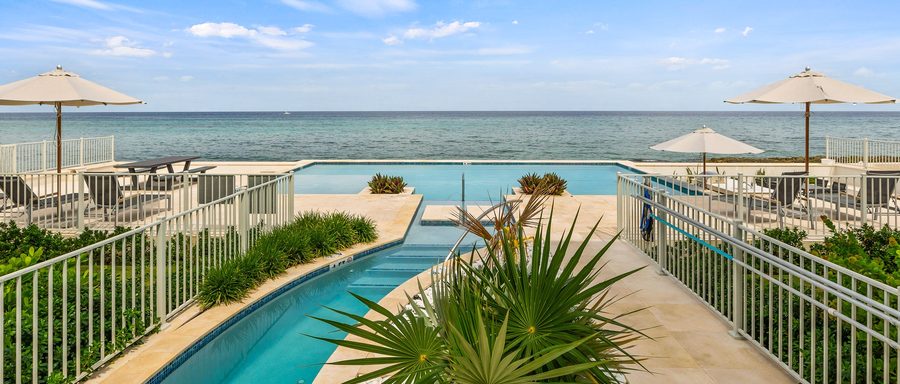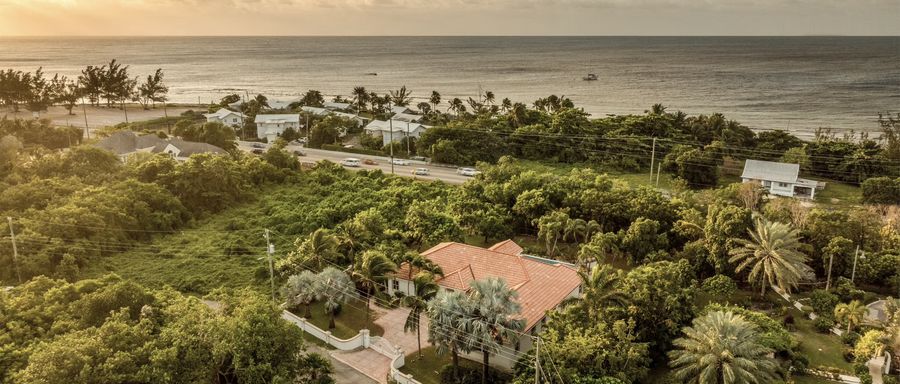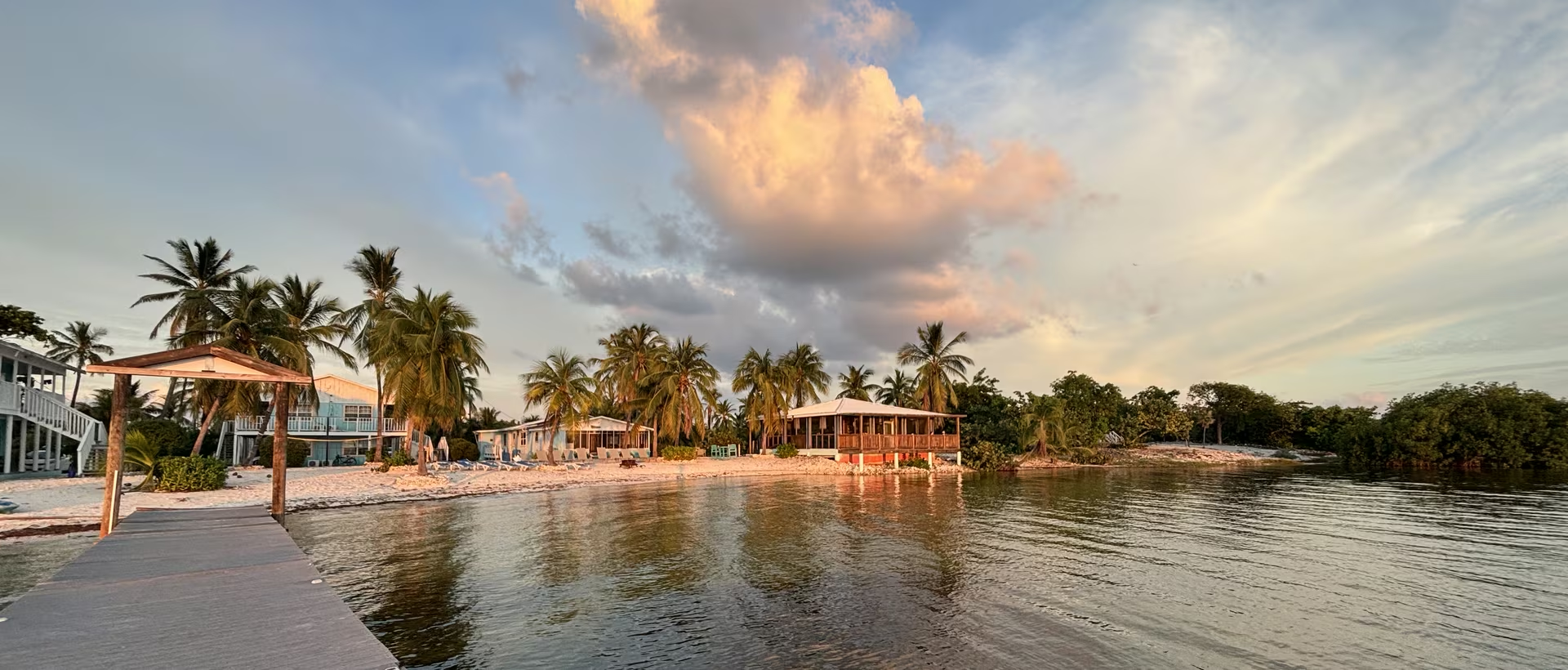
People move to the Cayman Islands for the sea, the safety, the year-round sunshine and a system with no income tax. What makes the move smooth, though, is the planning behind it: permits, a place to live, a bank account, a car and a school place.
This guide covers all of it, roughly in the order most people tackle it. It's written for anyone relocating for work, retiring here or simply weighing up island life, and it covers all three islands.
Every move is different, and rules for immigration, banking, schools and customs can change. Use this guide as a starting point, then check the details for your own situation with the relevant department or a Cayman attorney.
Before you book the flight
- Confirm your route to live here, which for most people is a job offer and a work permit.
- Start browsing rentals on CayLiving so you know what's available before you arrive.
- Gather your documents: passport, certified birth and marriage certificates, police clearance, bank and professional references, and school records.
- Start the pet import process early if you're bringing a dog or cat.
- Decide what to ship and what to buy once you arrive.
Your right to live and work in the Cayman Islands
For most people, moving to the Cayman Islands starts with a job offer. Work permits are applied for by your employer through Workforce Opportunities and Residency Cayman (WORC). Before they apply, employers must advertise the role locally and show they've tried to fill it with a qualified Caymanian first.
A work permit is tied to a specific employer and a specific role. Work permits granted since May 2026 generally require you to stay with your employer for at least two years, with limited exceptions, so it's worth understanding the terms before you sign.
WORC generally expects you to be off-island while your first work permit is being processed, so you may need to hold off booking your flight until it's approved. Timelines vary, so build in some flexibility.
Bringing your family. A spouse and children can usually join you as dependants on your permit. WORC sets a minimum income for work permit holders who want to bring dependants, so it's worth factoring this into salary discussions. Being a dependant doesn't give your partner the right to work. They will need their own work permit.
Other routes to residency. If you don't plan to work in Cayman, there are residency options for people of independent means. The main residency certificate currently requires:
| Requirement | Grand Cayman | Cayman Brac and Little Cayman |
|---|---|---|
| Income | CI$120,000 a year, or CI$400,000 in qualifying assets with a Cayman licensed institution | CI$75,000 a year, or CI$400,000 in qualifying assets with a Cayman licensed institution |
| Investment | At least CI$1 million, at least half of it in developed real estate | At least CI$500,000, at least half of it in developed real estate |
It's valid for 25 years and renewable, but doesn't give you the right to work. There's also a permanent residency route, which in Grand Cayman requires an investment of at least CI$2 million in developed real estate. Figures are based on current guidance from Cayman law firms and may change, so confirm with WORC or a Cayman attorney before applying. If you're thinking of buying, our buyers guide walks you through the process.
Finding somewhere to live
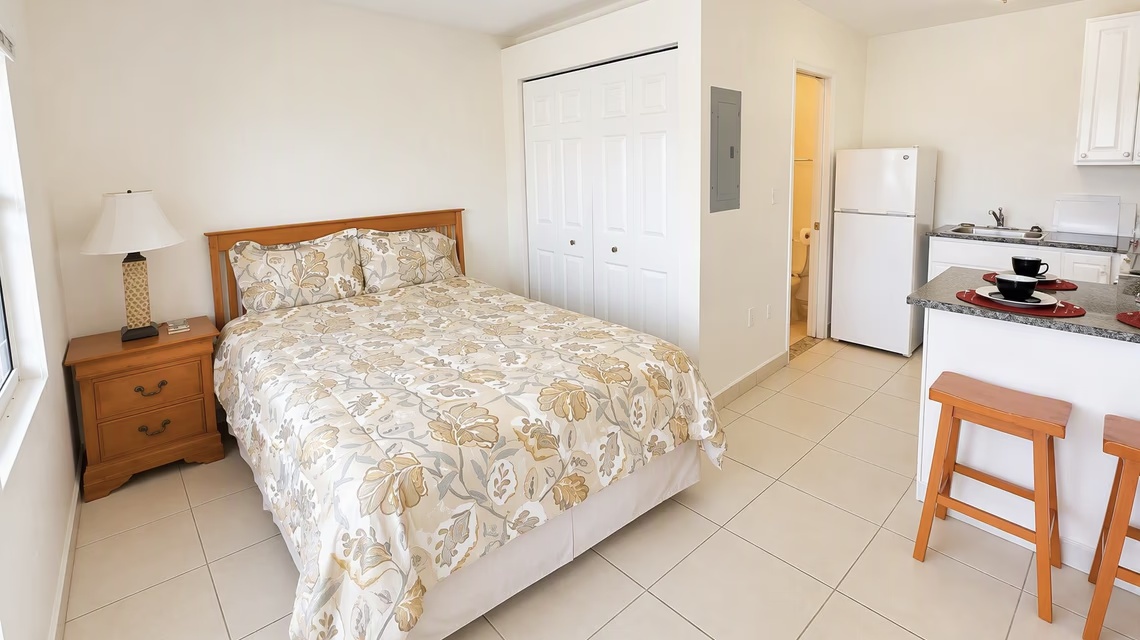
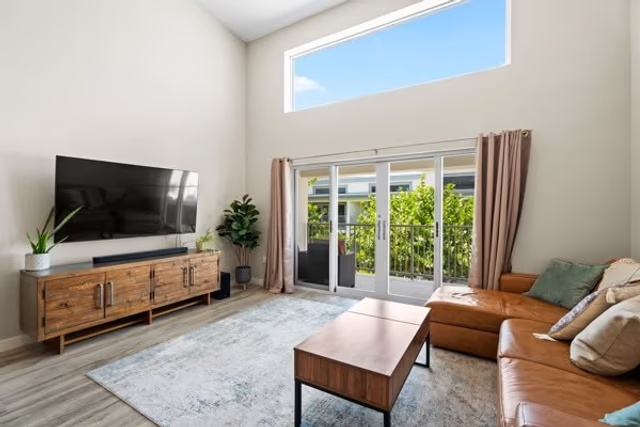
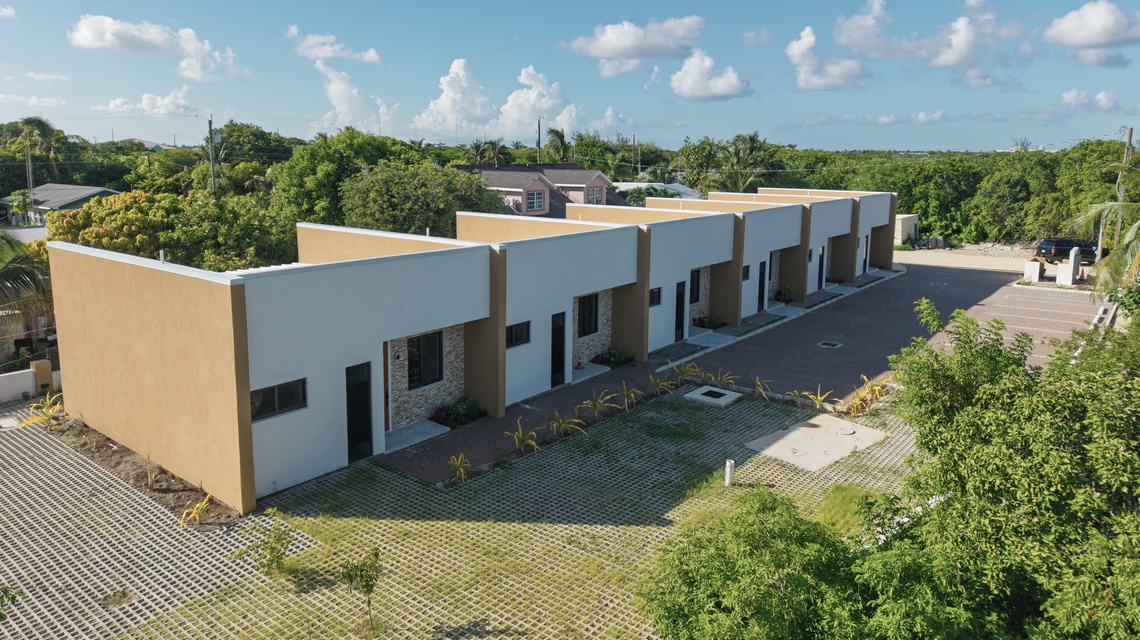
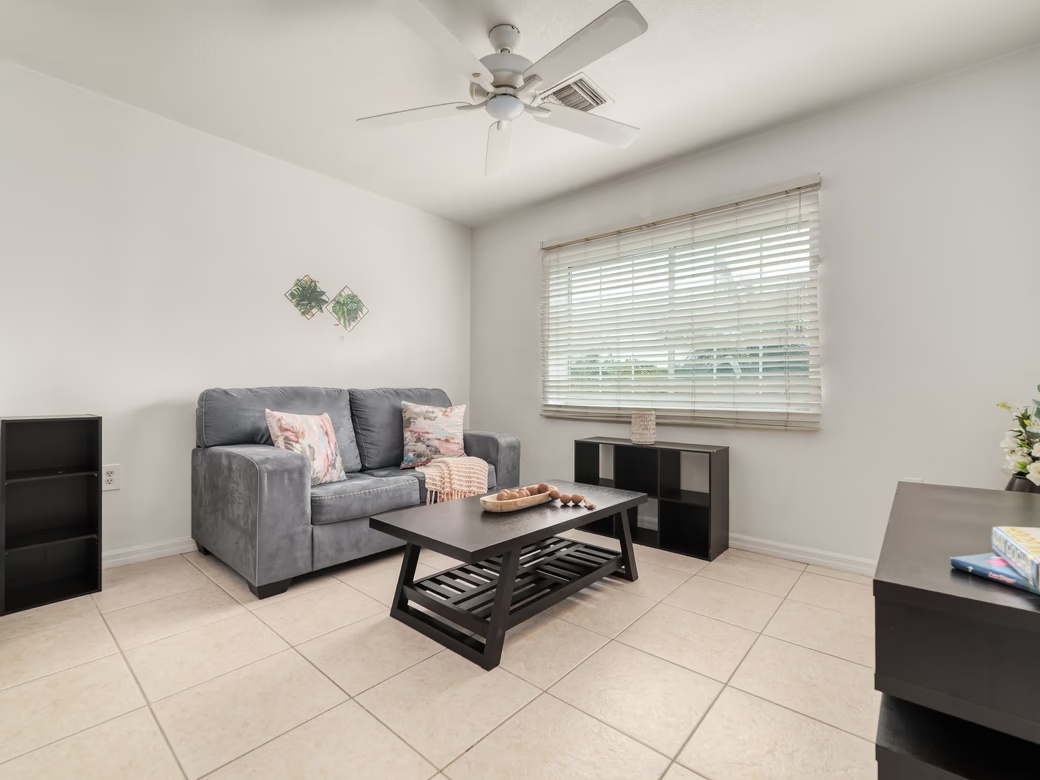
Most newcomers rent first, then buy once they know the island. It gives you time to learn the commute, find your favourite beach and work out which neighbourhood actually suits your life. You'll be in good company: just over half of all households in the Cayman Islands rent, according to the Economics and Statistics Office (ESO), the government's statistics office.
What rent looks like. Rents vary widely by area, size and finish, so the best guide is what's on the market right now. Browse current rentals on CayLiving to get a feel for prices.
Choosing an area. Grand Cayman's neighbourhoods vary a lot in feel, price and drive time. Seven Mile Beach and West Bay put you near the beach and restaurants, while many of the island's offices are in George Town and Camana Bay. South Sound, Prospect and Savannah are popular with families, and Bodden Town, North Side and East End offer more space and a quieter pace. Our Grand Cayman neighbourhood guide covers each area in detail.
Before you sign a lease:
- Check what's included in the rent, such as water, internet, strata amenities and utilities.
- Read the lease carefully for the deposit, notice period and lease length.
- Check the rules on pets if you have one.
- If you're renting from overseas, ask for a live video walkthrough. Browsing listings from agents and landlords on CayLiving is a good place to start.
The cost of living in Grand Cayman
There's no income tax in the Cayman Islands, so your salary goes further than you might expect. The trade-off is that government revenue comes largely from import duty, and it's estimated that around 90% of goods are imported, so everyday prices are likely to be higher than you're used to. Inflation was 2.8% in the first quarter of 2026, according to the ESO.
Here's a guide to some of the main costs:
| Cost | What to expect |
|---|---|
| Rent | Varies widely by area and size. Check current listings for an up-to-date picture. |
| Electricity | Roughly CI$400 a month for an average home, but this varies enormously (see below). |
| Groceries | Expect to pay more than you may be used to, as most food is imported. |
| Health insurance | Your employer must provide cover. The cost is often shared with you. |
| Pension | 10% of salary in total, generally split 5% from you and 5% from your employer. |
| Minimum wage | CI$8.75 an hour from 1 January 2026. |
How the electricity estimate works
Based on Caribbean Utilities Company (CUC) figures, the average home in Grand Cayman used 1,158 kWh a month in 2025. In June 2026, CUC's fuel rate was about CI$0.195 per kWh and its base energy charge about CI$0.139 per kWh, so roughly CI$0.334 per kWh:
- 1,158 kWh × CI$0.334 = about CI$387 a month
Add a fixed monthly facilities charge and a small regulatory fee on usage over 1,000 kWh, and a typical bill comes to roughly CI$400 a month. Treat this as a rough guide only. Bills vary enormously with the size of the home, air conditioning use, the season and monthly fuel costs, so don't budget on this figure alone.
Getting around
Driving. Cayman drives on the left. Depending on where your licence is from, you can drive on it for between 1 and 12 months. To keep driving after that, you'll need a Cayman licence. That often means passing a written test at the Department of Vehicle and Drivers' Licensing (DVDL), although licence holders from some countries are exempt and others need to pass both the written and road tests. Check with DVDL to see which applies to you.
Buying a car. Many new residents buy locally, new or used. If you're thinking of importing a vehicle, check the rules first. Vehicles more than seven years old can't be imported, and import duty is charged on the cost, insurance and freight (CIF) value. Electric and hybrid vehicles pay lower duty rates than petrol cars, although rates rise on higher-value vehicles. Since October 2025, every imported vehicle, whether petrol, hybrid or electric, also carries an environmental fee of CI$1,000, rising to CI$2,000 for vehicles valued at CI$80,000 or more.
Buses and taxis. Buses run from the George Town depot to every district. A short trip is around CI$2, and longer journeys can cost more. Buses are privately operated and schedules can be loose, so many residents rely on a car. Taxis are widely available.
Setting up your life admin
Banking. Opening a bank account takes a little paperwork. Banks will usually ask for your passport, your work permit letter, an employment letter confirming your salary and role, proof of address and a reference from your current bank. Request your bank reference before you leave home.
Health insurance. Health insurance is compulsory in the Cayman Islands. Employers must provide at least the standard level of cover for employees, and for their non-working spouse and children. Many employers offer more than the minimum, so ask what's included.
Pension. The total pension contribution is 10% of your salary, generally split 5% from you and 5% from your employer. Your employer must contribute at least 5%. For most non-Caymanian employees, pension contributions become compulsory after nine months of employment.
Utilities and connectivity. CUC supplies electricity in Grand Cayman and will ask for a security deposit when you open an account. Cayman Brac and Little Cayman have a separate provider. Cell phone and internet setup is quick, with several providers to choose from.
Moving your belongings and pets
Shipping household goods. If you're moving to Cayman for more than 12 months, used personal and household belongings can usually come in duty-free. To qualify, you'll generally need to have owned and used them for at least six months, and they need to arrive within six months of you. Items you haven't owned for at least six months may be charged duty, and vehicles are treated separately.
Declare everything and keep receipts. Packing new and used items separately makes clearance much easier.
Bringing a pet. Every dog and cat entering the Cayman Islands needs an import permit from the Department of Agriculture. The process includes a microchip, a rabies vaccination and treatment for ticks and tapeworms shortly before travel, and some pets also need a rabies titre blood test, depending on where they're coming from. Some breeds can't be imported. Start as soon as you can, as the process can sometimes take a few months.
Schools and family life
Education is compulsory from age 5 until 17, or until a child completes secondary school, whichever comes first. The Cayman Islands has almost 30 government and private schools across the three islands, plus a range of preschools.
Government schools give priority to Caymanians, followed by groups including permanent residents and the children of government employees. Most children of expatriate private sector workers attend private schools. These offer British, American and International Baccalaureate (IB) curricula, so you can often stay close to the system your children already know.
Private school places are in high demand and waiting lists are common, so apply as early as you can, ideally before you arrive.
Outside school, family life is very outdoors: beaches, sports clubs, swimming lessons, watersports and plenty of community events throughout the year.
Healthcare, safety and work
Healthcare. Grand Cayman has three hospital providers: the government-run Anthony S. Eden Hospital (formerly known as George Town Hospital), Doctors Hospital, and Health City, which has campuses in East End and Camana Bay. Cayman Brac has Faith Hospital, which also serves Little Cayman. Some specialist treatment may involve a referral overseas, so check what your insurance covers.
Safety. The Cayman Islands is widely regarded as one of the safest places in the Caribbean. The US State Department gives it its lowest travel risk rating, and serious violent crime fell by 16% in 2025, according to the Royal Cayman Islands Police Service (RCIPS). On the roads, fatal collisions fell from 11 in 2024 to six in 2025, and road safety remains a police priority.
Jobs. Cayman's labour market is strong. Unemployment was 2.6% in Fall 2025, with around 65,000 people in the labour force, according to the ESO. The biggest employers by industry are construction, wholesale and retail, professional services and financial services. Recruitment follows a Caymanians-first approach, so most people moving to the Cayman Islands secure a job offer before they relocate.
Cayman Brac and Little Cayman
For a quieter pace, the Sister Islands are a short flight from Grand Cayman with Cayman Airways. Together they're home to around 3,200 people, according to the ESO, and rents are often lower than in Grand Cayman.
The government also offers incentives to encourage people to buy and build in Cayman Brac, currently extended to the end of 2030. These include:
- No stamp duty on undeveloped land in Cayman Brac under CI$2 million, subject to conditions.
- A reduced 3% stamp duty on developed property in Cayman Brac under CI$2 million.
- No import duty on building materials for Cayman Brac and Little Cayman.
- No import duty on household appliances for Cayman Brac.
Residency thresholds for people of independent means are also lower in the Sister Islands, as shown in the table above. Browse Sister Islands property on CayLiving in Cayman Brac and Little Cayman.
Island life and settling in
Life in Grand Cayman is lived outdoors. Weekends revolve around the water, whether that's diving, paddleboarding, fishing or a long lunch by the beach. The community is genuinely international, with more than 130 nationalities living and working across the three islands, and joining a club, team or volunteer group is a quick way to make friends and feel at home.
Hurricane season runs from 1 June to 30 November, and for newcomers it can feel daunting. The island takes it seriously and is well prepared, with strong building standards and clear official guidance. Follow that guidance, make sure your home is storm-ready, keep a supply kit and check your insurance is in order, and you'll be ready.
Frequently asked questions
Do I need a job offer to move to the Cayman Islands?
For most people, yes. A work permit is usually the route to living here, and it's applied for by your employer. WORC generally expects you to be off-island while your first work permit is processed, so you may need to wait for approval before you travel. People of independent means can apply for residency instead, which involves an investment in Cayman and proof of income or savings.
Is there income tax in the Cayman Islands?
No. There's no income tax, but import duty means everyday goods cost more than in many other countries.
Should I rent or buy when I first move?
Most people rent first. It gives you time to get to know the neighbourhoods before you commit. When you're ready to buy, our buyers guide walks you through the process.
Can my partner work if they join me?
Not automatically. A spouse can usually live in Cayman as a dependant on your work permit, but will need their own work permit to work.
How long can I drive on my foreign licence?
Between 1 and 12 months, depending on where your licence is from. After that you'll need a Cayman licence, so check with DVDL which tests apply to you.
Can I bring my dog or cat?
Yes, except for some breeds, but it isn't a one-form process. You'll need an import permit, and requirements such as vaccinations, a microchip and sometimes a blood test depend on where your pet is coming from. Start as soon as you can, as the process can sometimes take a few months.
Start your search
Whether you're renting first or ready to buy, CayLiving brings homes from across the Cayman Islands together in one place. Browse rentals, explore homes for sale or start with our Grand Cayman neighbourhood guide.
Browse homes to rentSources
Cayman Islands Government, Economics and Statistics Office, Department of Vehicle and Drivers' Licensing, Customs and Border Control, Department of Agriculture, Department of Labour and Pensions, Health Insurance Commission, Health Services Authority, Royal Cayman Islands Police Service, Radio Cayman, US Department of State, Caribbean Utilities Company, Conyers, Bedell Cristin, Cayman Compass, Caymanian Times, Cayman Resident, Explore Cayman
This guide is general information, not legal, immigration, tax or financial advice. Rules, fees and thresholds can change, and every situation is different. Confirm the details with WORC, a Cayman attorney or the relevant government department before you make plans. Last reviewed: November 2026.