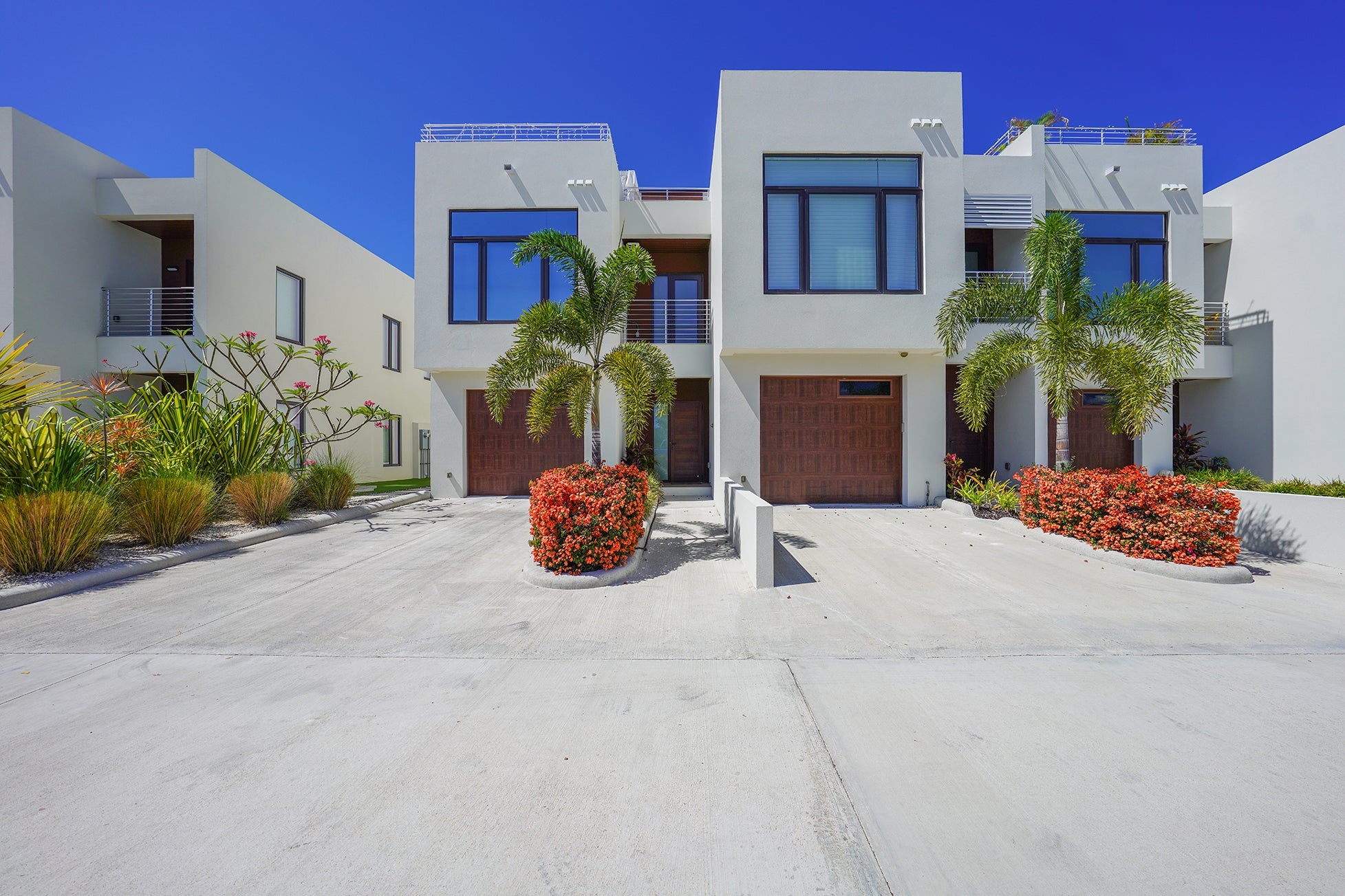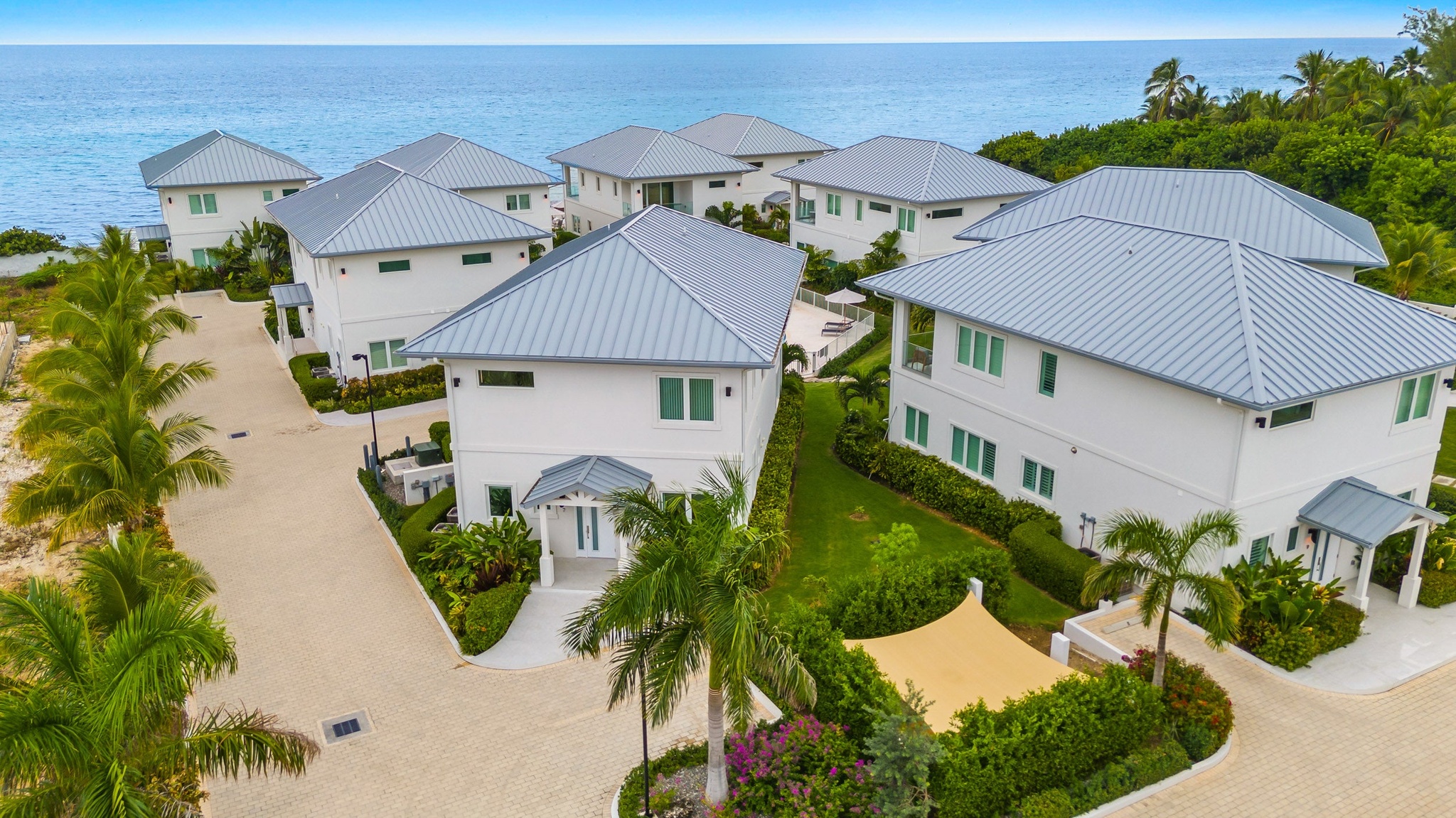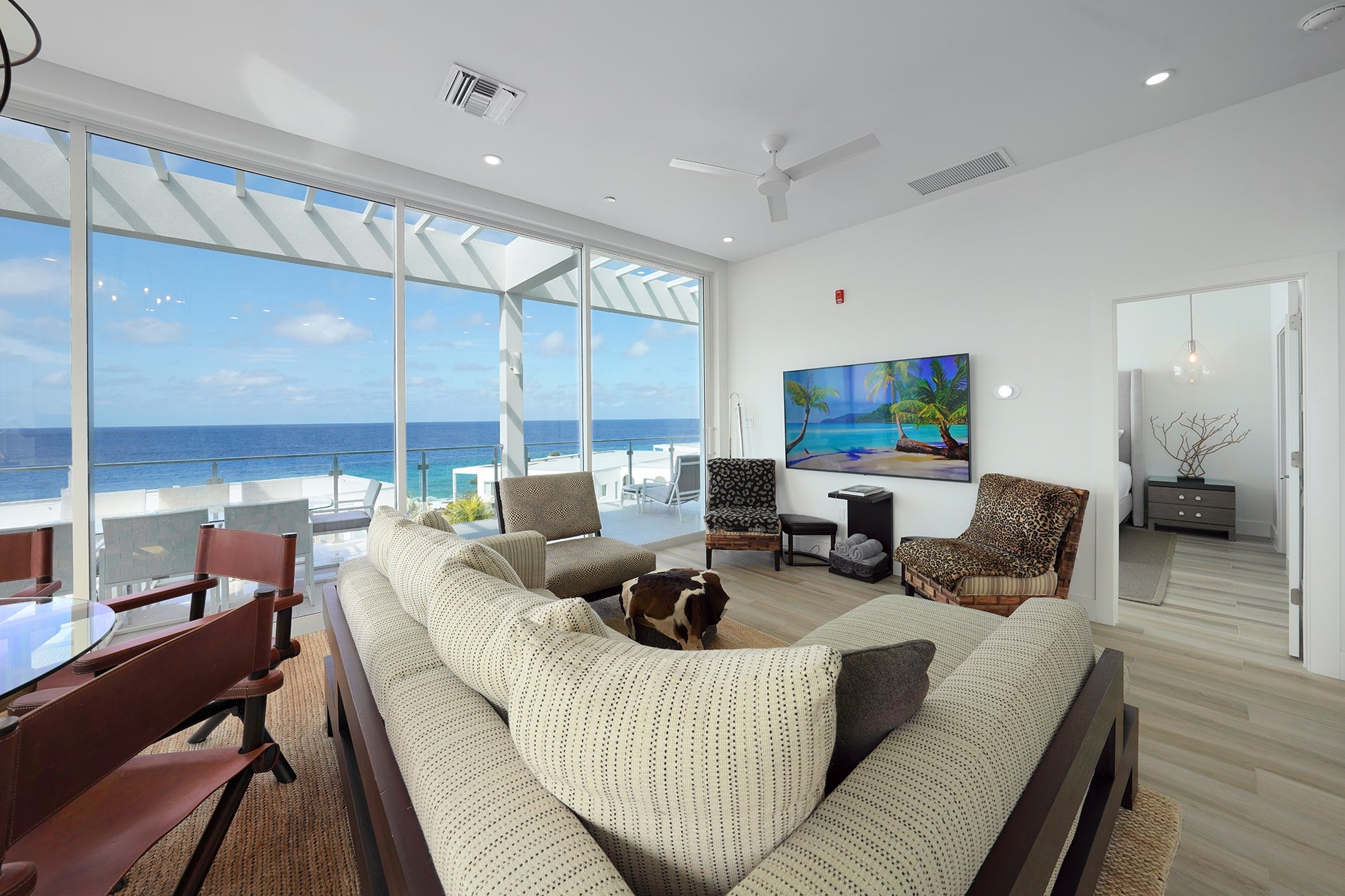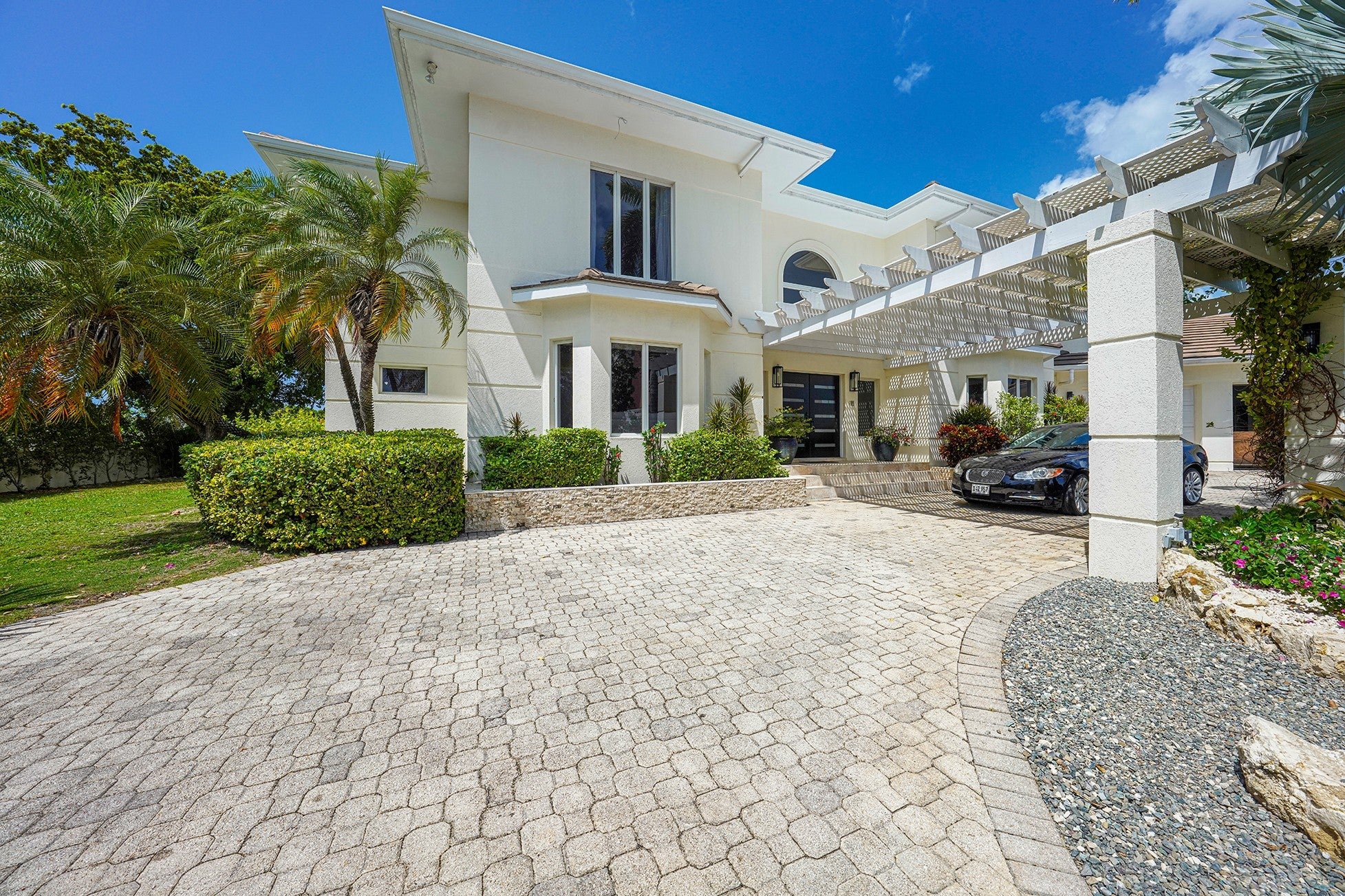
Buying property in the Cayman Islands is simpler than most people expect. There are no restrictions on non-Caymanians owning property, no annual property tax and no capital gains tax.
Ownership is recorded on a government land register, and the process is well established.
What catches buyers out is the stamp duty bill they didn't budget for, the mortgage deposit that turned out to be 30% rather than 10%, or the strata by-law that says no dogs. This guide covers all of it: how a purchase works from offer to keys, expected stamp duty you will pay in 2026/2027, the concessions available to Caymanian buyers, the incentives in Cayman Brac, financing, and what owning property does and doesn't mean for residency.
If you haven't settled on an area yet, start with our Grand Cayman neighbourhood guide and come back here once you have a shortlist.
Can foreigners buy property in the Cayman Islands?
Yes. Anyone can buy property in the Cayman Islands, whether or not they live here. Most land is freehold, a small number of parcels are leased from the government, and your attorney can confirm which applies before you commit.
Two things make Cayman straightforward compared with many markets. First, the government guarantees title. Every property is recorded on the official Land Registry, and if you are registered as the owner, the government stands behind that record. That is why buyers here don't need title insurance. Second, the only tax on a purchase is a one-off stamp duty. There is no annual property tax, no capital gains tax when you sell and no inheritance tax.
How buying property in Cayman works, step by step
Most residential sales in the Cayman Islands follow the same sequence. The time from accepted offer to closing is usually 30 to 90 days, depending largely on financing.
Set your budget and get pre-approved
Work out your all-in budget, not just the purchase price. Stamp duty alone adds 7.5% to 10% for most buyers. If you need a mortgage, get pre-approval from a local bank before you start viewing. It strengthens any offer you make and flushes out surprises early.
Find the property
Search listings across the whole market, not just one brokerage. On CayLiving you can see homes for sale, condos and land listed by brokerages, developers and private sellers in one place.
Make an offer
Offers are made in writing, as a written offer to purchase. Once signed by both sides, it is legally binding, so have your attorney review it before you sign, not after. Conditions for financing, strata document review and anything else your attorney recommends should be written in at this stage.
Pay the deposit
A deposit of usually 5% to 10% of the purchase price secures the property. It is held in escrow, usually by the seller's agent or an attorney, until closing.
Due diligence
Your attorney searches the title at the Land Registry, checks for charges, easements and covenants, and raises any questions with the seller's side. For a strata property, they will also request a certificate from the strata corporation showing any unpaid fees and upcoming special assessments (one-off charges to owners for major repairs or shortfalls).
Closing
Your attorney arranges the balance of funds, stamp duty and fees. The seller signs the transfer and hands over the keys. If you are using a mortgage, closing usually happens at the bank.
Registration
The transfer is registered at the Land Registry and you become the registered owner.
Who pays what: the buyer pays stamp duty and their own legal fees. The seller pays the agent's commission.
Cayman Islands stamp duty in 2026/2027
Stamp duty is the biggest cost of buying property in Cayman after the price itself. It is charged once, on transfer, and it is calculated on the market value or the purchase price, whichever is higher.
| Property value | Stamp duty rate |
|---|---|
| Under CI$2 million | 7.5% |
| CI$2 million and over | 10% |
The 10% rate came into force on 1 January 2026 and applies to homes, land and commercial property. It applies to all buyers, including Caymanians, and it is charged on the full value, not just the portion above CI$2 million.
That last point matters at the threshold. The difference between a CI$1,990,000 purchase and a CI$2,000,000 purchase is more than a rounding error:
- CI$1,990,000 × 7.5% = CI$149,250
- CI$2,000,000 × 10% = CI$200,000
- Difference: CI$50,750 more in duty for a CI$10,000 higher price
Some other points to note:
- Chattels are not charged stamp duty. Chattels are furniture and other items that can be removed easily without damaging the building. If they are included in the sale, their value can be deducted from the price before duty is calculated. Each item needs a realistic value based on its age and condition, flat percentage estimates aren't accepted, and the Lands & Survey Department can ask for invoices.
- Mortgages carry stamp duty too. A separate stamp duty of 1% to 1.5% is charged on the amount you borrow.
- US dollar prices. Many listings are quoted in US dollars. Stamp duty is assessed in Cayman dollars at the fixed rate of CI$1 = US$1.20, so a US$2.4 million property sits right on the CI$2 million line.
Worked example: a CI$800,000 condo bought with cash
- Stamp duty: CI$800,000 × 7.5% = CI$60,000
- Legal fees, roughly 1%: CI$8,000
- Total: about CI$68,000 on top of the price (8.5%)
Buying with a mortgage? Add the bank's fees, a valuation, stamp duty on the mortgage and the other closing costs in the table further down. As a rough guide, total closing costs for borrowers usually come to around 10% to 12% on top of the price.
Stamp duty concessions for Caymanian buyers
If you are Caymanian and buying your first or second property, you may pay reduced stamp duty or none at all. You need to apply for the concession, and it must be approved before closing, so apply as soon as your offer is accepted. Approval can take time, and delays can cause first-time buyers to miss out on a property.
Since February 2025, the concessions apply to property anywhere in Grand Cayman and the Sister Islands, including areas such as Seven Mile Beach that were previously excluded.
First-time Caymanian buyers: stamp duty concessions
| Buyer | Property type | No stamp duty up to | 3.75% on the portion between | Full 7.5% on the whole value above |
|---|---|---|---|---|
| Individual | Raw land | CI$250,000 | CI$250,000 and CI$350,000 | CI$350,000 |
| Individual | Developed home | CI$550,000 | CI$550,000 and CI$650,000 | CI$650,000 |
| Group of 2 to 10 | Raw land | CI$450,000 | CI$450,000 and CI$550,000 | CI$550,000 |
| Group of 2 to 10 | Developed home | CI$600,000 | CI$600,000 and CI$700,000 | CI$700,000 |
Second-time Caymanian buyers: stamp duty concessions
Second-time buyers don't get a duty-free amount. Instead, they pay a reduced rate of 3.75% on the whole price, up to the limits below. Above those limits, the full 7.5% applies to the whole price.
| Buyer | Property type | 3.75% on the whole value up to | Full 7.5% on the whole value above |
|---|---|---|---|
| Individual | Raw land | CI$300,000 | CI$300,000 |
| Individual | Developed home | CI$600,000 | CI$600,000 |
| Group of 2 to 10 | Raw land | CI$550,000 | CI$550,000 |
| Group of 2 to 10 | Developed home | CI$700,000 | CI$700,000 |
Worked example: a single first-time Caymanian buyer, CI$600,000 townhouse (Individual, Developed home row)
- First CI$550,000: no duty
- Remaining CI$50,000 × 3.75% = CI$1,875
- Total stamp duty: CI$1,875, against CI$45,000 at the standard rate
The cut-off points are sharp. A first-time buyer paying CI$650,001 for a home loses the concession entirely and pays CI$48,750. Know where your thresholds sit before you negotiate, and browse homes under CI$650,000 to see what's available.
Other support for first-time Caymanian buyers
CIREBA first-time buyer grant. The Cayman Islands Real Estate Brokers Association launched a grant for first-time Caymanian buyers in 2026, funded for an initial 12 months. To qualify, you must be a first-time Caymanian buyer, have an approved stamp duty concession, and be represented by a CIREBA member agent. One grant is available per property:
| Property price | Grant |
|---|---|
| Up to CI$99,999 | CI$1,000 |
| CI$100,000 to CI$249,999 | CI$2,500 |
| CI$250,000 to CI$600,000 | CI$5,000 |
The grant can be used for closing costs, property insurance or, if those are already covered, essential furnishings. Funding is limited, so check with a CIREBA member agent that the scheme is still open before you factor it into your budget.
Government mortgage support. The government announced in June 2026 that it is relaunching its guaranteed mortgage scheme, formerly known as GGHAM, as the HOME programme (Home Ownership and Mortgage Empowerment). It is aimed at lower-income Caymanians and civil servants and is designed to allow mortgages with no down payment. The Cayman Islands Development Bank and the National Housing Development Trust can confirm current availability and eligibility.
Pension withdrawals. Caymanians and status holders may be able to use part of their pension towards a deposit. Ask your pension provider how it works and how long it takes.
Buying in Cayman Brac and Little Cayman
The Sister Islands are a different market. Prices are lower, the pace is slower, and Cayman Brac comes with its own set of property incentives. They apply to all buyers, not just Caymanians, and they run until 31 December 2030.
Cayman Brac stamp duty concessions
- Undeveloped land under CI$2 million: no stamp duty
- Developed property under CI$2 million: 3% instead of 7.5%
The land waiver comes with a condition. You must build on the land within two years, with a building that needs planning approval and a Certificate of Occupancy. You can apply to the Minister for Finance for up to two more years. If the land still isn't developed at the end of that period, the full stamp duty becomes payable plus a 10% penalty, and the land can't be sold until the conditions are met. In other words, it is a concession for people who intend to build, not for land banking.
Worked example: a CI$400,000 home in Cayman Brac
- Cayman Brac rate: CI$400,000 × 3% = CI$12,000
- Same price in Grand Cayman: CI$400,000 × 7.5% = CI$30,000
- Saving: CI$18,000
Building materials imported to both Cayman Brac and Little Cayman are also free of import duty, which makes a real difference to construction costs. Little Cayman does not have the stamp duty concession.
Browse Sister Islands property for sale in Cayman Brac and Little Cayman to see what is currently available.
The full cost of buying property in Cayman
Here is what to budget for beyond the purchase price.
Closing costs (one-off, paid when you buy)
| Cost | Typical amount | Paid by |
|---|---|---|
| Stamp duty | 7.5% or 10% (less with concessions) | Buyer |
| Legal fees | Roughly 0.5% to 1% of the price | Buyer |
| Survey or inspection | Roughly CI$500 to CI$1,500 | Buyer |
| Valuation (if financing) | From about CI$500 | Buyer |
| Mortgage stamp duty (if financing) | 1% to 1.5% of the loan | Buyer |
| Bank commitment fee (if financing) | Up to 1% of the loan | Buyer |
| Bank's attorney (if financing) | Varies, ask your lender | Buyer |
| Medical exam for life insurance (if financing) | From about CI$150 | Buyer |
| Life insurance, first year's premium (if financing, usually paid upfront) | Varies with age and health | Buyer |
| Agent's commission | Set by the listing agreement | Seller |
Ongoing costs of ownership
- Strata fees if you buy a condo or a home in a strata development. These cover shared insurance, maintenance, landscaping, pools and management, and vary widely between developments.
- Home insurance for contents, and for the building itself if it isn't covered by a strata policy. Hurricane cover is essential and not cheap.
- Life insurance if you have a mortgage, renewed each year.
- Utilities. Electricity is a bigger line item than many newcomers expect, particularly with air conditioning running all year round.
What you won't pay: annual property tax, capital gains tax on sale, or inheritance tax.
Getting a mortgage in the Cayman Islands
Local banks lend to both residents and non-residents. Terms vary from bank to bank, so compare several before you commit.
- Deposits. Usually between 5% and 40% of the price, depending on the bank, the property and your circumstances. The lowest deposits are generally offered to Caymanians and status holders. Non-residents typically put down 20% to 30%.
- Interest rates. Rates are typically linked to the US prime rate, usually 1% to 3% above it. A bigger deposit often earns a lower rate.
- Terms. Terms vary widely between banks, usually 15 to 30 years and sometimes longer.
- Life insurance. Banks usually require life insurance.
A difference of half a percent on the rate adds up to a significant sum over the life of the loan, so it pays to shop around.
Buying a condo: what strata means
Most condos and many townhouse and gated home developments in Cayman are held under a strata plan. You own your unit outright, with its own registered title. You also own a share of the common property, such as the grounds, pool and parking, through a strata corporation that every owner belongs to.
The strata corporation insures the buildings, maintains the common areas and collects strata fees from owners to pay for it. It is run by an executive committee elected by the owners, under a set of by-laws.
Before you commit, your attorney should review:
- The by-laws. These set the rules on pets, renovations, short-term rentals and more. Read them yourself as well.
- The accounts and budget. Low fees can mean an underfunded reserve fund and a large special assessment later.
- Any planned special assessments. The strata certificate your attorney requests will show unpaid fees and any future special assessments already agreed.
Don't compare strata fees on price alone. One building's fee may include building insurance, cable and water while another's doesn't, so a lower fee isn't always better value. Ask for a breakdown of what each fee covers.
Buying land to build
Land is a popular route into the market, particularly in the eastern districts of Grand Cayman such as Bodden Town, North Side and East End, and in the Sister Islands. Before you buy a plot, check the zoning, access and any restrictive covenants with your attorney. Also check whether utilities reach the site and what planning permission you will need.
First-time Caymanian buyers get a separate stamp duty concession for raw land, and in Cayman Brac undeveloped land under CI$2 million is duty-free if you build within the time allowed. Building materials are free of import duty in Cayman Brac and Little Cayman, and in Grand Cayman they are charged at a reduced flat rate of 15%. Both measures are in place until the end of 2030. Browse land for sale to see current plots.
Buying off-plan
Buying off-plan, before a building is finished, is common in Grand Cayman, particularly in new condo developments in areas such as Seven Mile Beach and George Town. The contract matters even more here. Your attorney should make sure your deposit is protected if the developer fails to complete or the project never breaks ground, and should confirm how and when stamp duty will be assessed.
Does buying property in Cayman give you residency?
Owning property does not by itself give you the right to live in the Cayman Islands. It can, however, support a residency application for people who don't need to work here. There are two main routes:
- Permanent residence. The Certificate of Permanent Residence for Persons of Independent Means requires an investment of CI$2 million (about US$2.4 million) in developed real estate, on any of the three islands, bought without a mortgage. Raw land doesn't count.
- 25-year residency. The Residency Certificate for Persons of Independent Means is renewable and has a lower investment requirement, part of which must be in developed real estate. Applicants also need to show a minimum annual income or a minimum amount held in a local bank. The requirements are lower for Cayman Brac and Little Cayman.
Immigration fees were updated in May 2026 and the rules change from time to time. Take advice from an immigration attorney before you buy with residency in mind.
Frequently asked questions
How much is stamp duty in the Cayman Islands?
7.5% on property under CI$2 million and 10% on property worth CI$2 million or more, charged on the higher of the market value or the price. Caymanians buying their first or second property can pay reduced stamp duty or none at all (see the tables above). In Cayman Brac, developed property under CI$2 million is charged at 3%, and undeveloped land under CI$2 million is exempt if you build on it.
Do I need an attorney to buy property in Cayman?
It isn't a legal requirement, but it is standard practice and strongly advised. Your attorney reviews the contract, searches the title, handles the closing and registers the transfer. Budget roughly 0.5% to 1% of the price.
How long does it take to buy a property in Cayman?
Usually 30 to 90 days from accepted offer to closing. Cash purchases tend to close faster. Financing and stamp duty concession approvals can add time.
Is there property tax in the Cayman Islands?
No. There is no annual property tax, no capital gains tax and no inheritance tax. Stamp duty on purchase is the only property tax.
Who pays the real estate agent's commission?
The seller.
Can I rent out my property?
Generally yes, but check the strata by-laws first if you are buying a condo. Some developments restrict short-term or holiday rentals.
Start your search
CayLiving brings the whole Cayman property market into one place, from Seven Mile Beach condos to land in Cayman Brac, listed by brokerages, developers and private sellers. Search properties for sale, or read our Grand Cayman neighbourhood guide if you are still deciding on an area. Not ready to buy yet? Browse homes to rent.
Search properties for saleSources
Cayman Islands Government, Lands & Survey Department, Radio Cayman, CIREBA, Cayman Compass, Cayman Resident, PwC, Ogier, Stuarts Humphries
This guide is general information, not legal, tax or financial advice. Rates, thresholds and schemes can change, and every purchase is different. Confirm the details with a Cayman attorney, your bank or the relevant government department before you commit. Last reviewed: September 2026.